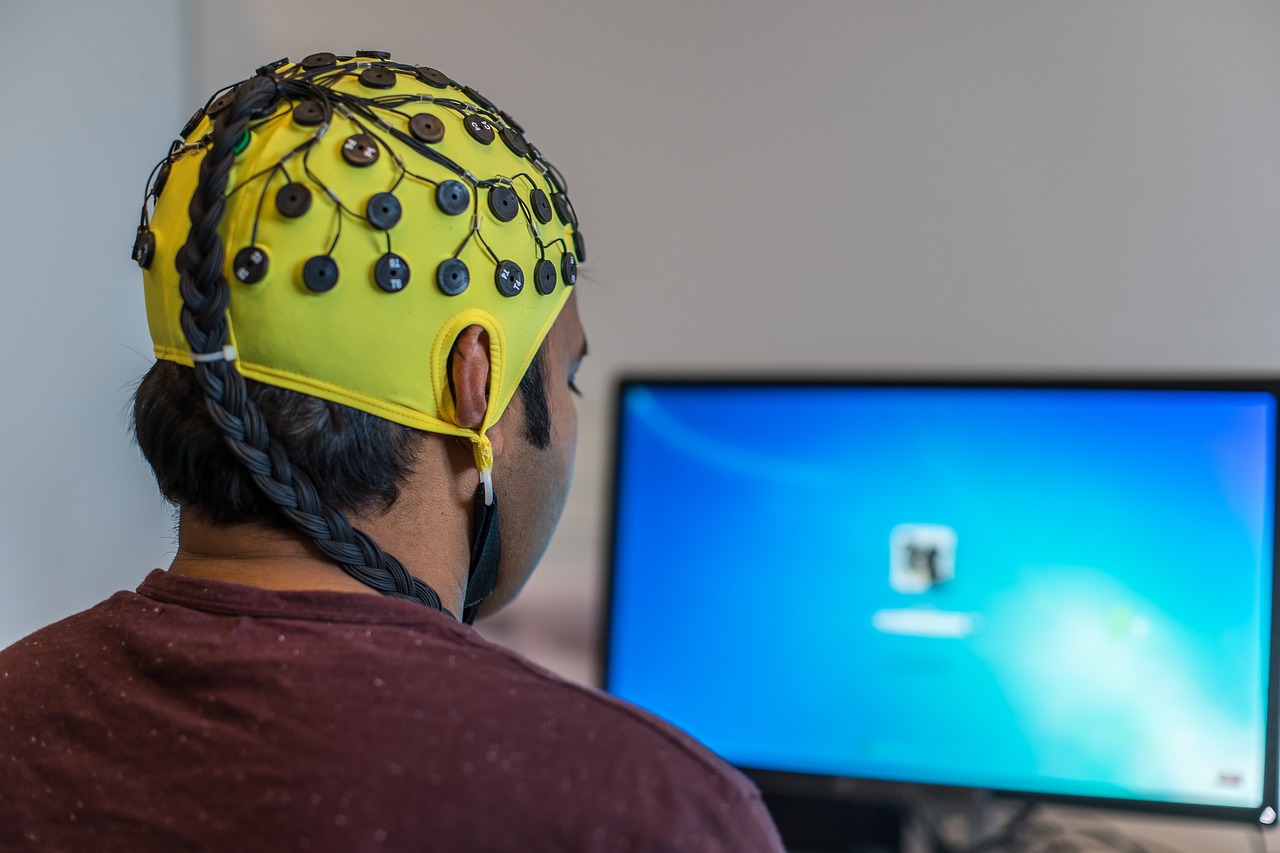
Your brain is not an infinite processing machine. Every decision, notification, and task competes for limited mental resources, creating invisible friction that silently sabotages your productivity and drains your cognitive energy throughout the day.

Understanding how to manage cognitive load—the amount of mental effort required to process information—represents one of the most powerful yet underutilized strategies for achieving peak performance. When you master the art of optimizing your mental bandwidth, you unlock the ability to work smarter, think clearer, and accomplish more while experiencing less mental fatigue.
🧠 Understanding Cognitive Load: The Foundation of Mental Performance
Cognitive load theory, developed by educational psychologist John Sweller in the 1980s, explains how our working memory handles information. Unlike long-term memory, which has virtually unlimited capacity, working memory can only juggle a limited number of items simultaneously—typically between four and seven discrete pieces of information.
When we exceed this capacity, our mental performance deteriorates rapidly. Tasks take longer, errors multiply, and decision quality plummets. This phenomenon affects everyone from students cramming for exams to executives navigating complex business decisions.
The Three Types of Cognitive Load
Not all mental effort is created equal. Researchers identify three distinct types of cognitive load that impact your brain differently:
- Intrinsic load: The inherent difficulty of the task itself, determined by complexity and your existing knowledge
- Extraneous load: Unnecessary mental effort caused by poor presentation, distractions, or inefficient processes
- Germane load: Productive effort invested in learning, understanding, and building mental schemas
The key to peak productivity lies in minimizing extraneous load, managing intrinsic load effectively, and maximizing germane load—the type that actually builds competence and long-term capability.
💡 The Hidden Productivity Killers Overloading Your Brain
Modern work environments assault our cognitive resources from multiple directions simultaneously. Identifying these productivity vampires represents the crucial first step toward reclaiming your mental energy.
Context Switching: The Silent Performance Destroyer
Research from the University of California, Irvine, reveals that after being interrupted, it takes an average of 23 minutes to return to the original task fully. Each time you switch between email, messaging apps, documents, and meetings, you impose a “switching tax” on your brain that compounds throughout the day.
This constant task-hopping doesn’t just waste time—it fundamentally degrades the quality of your thinking. Your brain operates in different modes for different tasks, and transitioning between these modes consumes significant cognitive resources.
Decision Fatigue: When Choice Becomes a Burden
Every decision you make depletes your mental reserves, regardless of importance. Whether choosing what to wear, what to eat, or which project to prioritize, your brain expends glucose and willpower with each choice.
This explains why successful people like Barack Obama and Mark Zuckerberg famously limit their wardrobe choices—they’re conserving cognitive resources for decisions that truly matter. By the end of a typical day filled with hundreds of micro-decisions, your ability to make sound judgments diminishes substantially.
Information Overload in the Digital Age
The average person encounters more information in a single day than someone living in the 15th century encountered in their entire lifetime. This constant barrage of notifications, updates, and stimuli creates a perpetual state of partial attention that prevents deep, focused work.
Your brain wasn’t designed to process the volume of information that modern technology delivers. This mismatch between evolutionary capacity and contemporary demands creates chronic cognitive overload that manifests as stress, anxiety, and declining productivity.
🎯 Strategic Approaches to Optimize Your Cognitive Load
Once you understand what drains your mental resources, you can implement evidence-based strategies to protect and enhance your cognitive capacity. These approaches work synergistically to create an environment conducive to peak mental performance.
Implement Radical Prioritization
The 80/20 principle applies powerfully to cognitive load management. Approximately 20% of your activities generate 80% of your meaningful results. Identifying and protecting time for these high-impact activities shields your best cognitive resources from trivial demands.
Start each week by identifying your three most important outcomes. Structure your schedule to tackle these priorities during your peak mental performance hours—typically the first 2-3 hours after you begin focused work. Everything else becomes secondary and should be batched, delegated, or eliminated entirely.
Design Your Environment for Cognitive Efficiency
Your physical and digital environments constantly influence your cognitive load. Small environmental changes compound into significant performance improvements over time.
- Remove visual clutter from your workspace—each visible item competes for attention
- Disable non-essential notifications across all devices and applications
- Create separate physical or digital spaces for different types of work
- Use website blockers during focused work sessions to eliminate temptation
- Position your workspace to minimize visual interruptions from traffic or movement
These modifications reduce extraneous cognitive load, freeing mental bandwidth for productive work. The goal isn’t sterility but intentionality—every element in your environment should serve your focus rather than fragment it.
Master the Art of Cognitive Offloading
Your brain excels at processing and creating but struggles with storage and retrieval. Cognitive offloading—transferring information from your mind to external systems—liberates working memory for higher-level thinking.
Implement a trusted capture system for ideas, tasks, and commitments. Whether you use digital tools or analog notebooks matters less than consistency. When your brain trusts that information is safely stored elsewhere, it stops using precious working memory to hold onto details.
Digital task management applications provide excellent platforms for cognitive offloading, allowing you to externalize your mental to-do list and focus fully on the work at hand rather than remembering what comes next.
⚡ Advanced Techniques for Peak Cognitive Performance
Beyond foundational strategies, advanced practitioners employ sophisticated techniques to push their cognitive capabilities to exceptional levels. These methods require more initial effort but deliver disproportionate returns.
Time Blocking and Deep Work Sessions
Cal Newport’s concept of “deep work”—professional activities performed in a state of distraction-free concentration—represents the highest form of cognitive optimization. During deep work, you leverage your full cognitive capacity on a single demanding task, producing exceptional output in compressed timeframes.
Structure your calendar around protected deep work blocks of 90-120 minutes. This duration aligns with your brain’s natural ultradian rhythms—cycles of high and low alertness that repeat throughout the day. Working with these biological patterns rather than against them amplifies productivity while reducing fatigue.
Strategic Energy Management Throughout Your Day
Not all hours possess equal cognitive potential. Your mental performance fluctuates predictably based on circadian rhythms, meal timing, and previous cognitive expenditure. Matching task difficulty to your energy levels optimizes overall output.
Reserve your peak cognitive hours for work requiring creativity, complex problem-solving, or strategic thinking. Schedule routine administrative tasks, meetings, and low-stakes decisions for periods of naturally lower mental energy. This alignment ensures you invest your best cognitive resources where they generate maximum value.
The Power of Deliberate Recovery
High performers distinguish themselves not just by working harder but by recovering more effectively. Cognitive recovery—actively replenishing mental resources—enables sustained high performance without burnout.
Effective recovery strategies include:
- Brief walks in nature, which restore attention capacity more effectively than urban environments
- Strategic napping (10-20 minutes) to clear accumulated cognitive load
- Meditation or mindfulness practices that reduce mental noise
- Physical exercise, which enhances brain function for hours afterward
- Engaging in activities unrelated to work that activate different neural networks
Recovery isn’t laziness—it’s strategic investment in your most valuable asset: your cognitive capacity. Without adequate recovery, performance inevitably degrades, regardless of effort or willpower.
🔧 Building Systems That Sustain Cognitive Optimization
Individual tactics deliver temporary improvements, but lasting transformation requires systematic change. Building routines and systems that automatically reduce cognitive load creates sustainable peak performance.
Develop Decision-Making Frameworks
Pre-made frameworks eliminate decision fatigue for recurring choices. Instead of deliberating each instance, you apply a predetermined rule that conserves mental energy.
Examples include meal planning for the week, establishing criteria for which meeting invitations to accept, creating project evaluation checklists, or defining clear boundaries for when you check email. Each framework eliminates dozens of micro-decisions weekly, preserving cognitive resources for truly novel situations requiring fresh thinking.
Automate and Delegate Ruthlessly
Every task you perform carries an opportunity cost—the alternative use of that time and mental energy. Automation and delegation transfer cognitive load away from your limited personal bandwidth.
Audit your recurring tasks and ask: “Could technology handle this?” Modern automation tools can manage scheduling, data entry, report generation, social media posting, and countless other activities that consume disproportionate mental energy relative to their value.
For tasks requiring human judgment but not your specific expertise, delegation becomes the optimization strategy. The time invested training others or paying for services often returns multiples through preserved cognitive capacity for higher-leverage activities.
Create Consistent Routines and Rituals
Routines transform effortful decisions into automatic behaviors, dramatically reducing cognitive load. When activities become habitual, your brain shifts them from effortful conscious processing to efficient automatic processing, freeing working memory for more demanding tasks.
Establish consistent routines for starting work, transitioning between different types of tasks, and ending your workday. These rituals serve as cognitive bookends that help your brain shift modes efficiently without depleting mental resources through constant reorientation.
📊 Measuring and Refining Your Cognitive Performance
What gets measured gets managed. Tracking relevant metrics helps you understand whether your optimization strategies actually enhance performance or merely create the illusion of productivity.
Key Performance Indicators for Cognitive Health
Unlike simple output metrics, cognitive optimization requires measuring both results and sustainability. Consider tracking:
| Metric | What It Reveals |
|---|---|
| Deep work hours per week | Time spent in focused, distraction-free work |
| Task completion rate | Percentage of planned priorities actually finished |
| Perceived mental fatigue | Subjective energy levels throughout the day |
| Distraction frequency | How often focus breaks during work sessions |
| Decision quality | Outcomes of important choices over time |
Regular assessment reveals patterns that inform continuous refinement. Perhaps your productivity crashes after lunch, suggesting dietary adjustments. Maybe you accomplish more working from home versus the office, indicating environmental factors worth addressing.
The Iterative Optimization Process
Cognitive optimization isn’t a destination but an ongoing practice of experimentation and adjustment. What works brilliantly during one life phase may prove ineffective when circumstances change.
Adopt a scientist’s mindset toward your own performance. Implement changes as experiments, collect data on results, and refine based on evidence rather than assumptions. This empirical approach prevents you from clinging to strategies that no longer serve you while encouraging beneficial innovations.

🚀 Transforming Knowledge Into Consistent Action
Understanding cognitive load optimization intellectually differs vastly from implementing it consistently. The gap between knowledge and execution determines whether these insights transform your productivity or merely occupy space in your awareness.
Start with one strategy rather than attempting comprehensive transformation overnight. Select the intervention that addresses your most significant cognitive drain—perhaps notification management, time blocking, or decision frameworks. Implement it consistently for three weeks, the minimum duration for pattern establishment.
Once the first strategy becomes automatic, layer in additional optimizations gradually. This incremental approach prevents the ironic situation where attempting to reduce cognitive load actually increases it through overwhelming change.
The Compound Effect of Small Improvements
Cognitive optimization delivers benefits that compound exponentially over time. A 10% improvement in daily focus, sustained over months, doesn’t just add up—it multiplies through enhanced learning, better decisions, and accumulated expertise.
These gains extend beyond professional productivity into life quality. Reduced mental clutter creates space for presence with loved ones, engagement with hobbies, and mental clarity that enhances every experience. The ultimate goal isn’t merely doing more but living better through strategic management of your most precious resource: your attention and cognitive capacity.
Your mind possesses extraordinary capabilities, but only when protected from the relentless demands of modern information environments. By implementing cognitive load optimization strategies systematically, you unlock levels of focus, creativity, and productivity that most people never experience—not through superhuman effort, but through intelligent design of how you work and think.
The mastery of your mind begins with a single intentional choice to protect your cognitive resources. From that foundation, you build practices and systems that sustain peak performance not just for hours or days, but across the span of your entire career and life. The question isn’t whether these strategies work—the evidence is overwhelming. The only question that matters is: when will you begin implementing them?