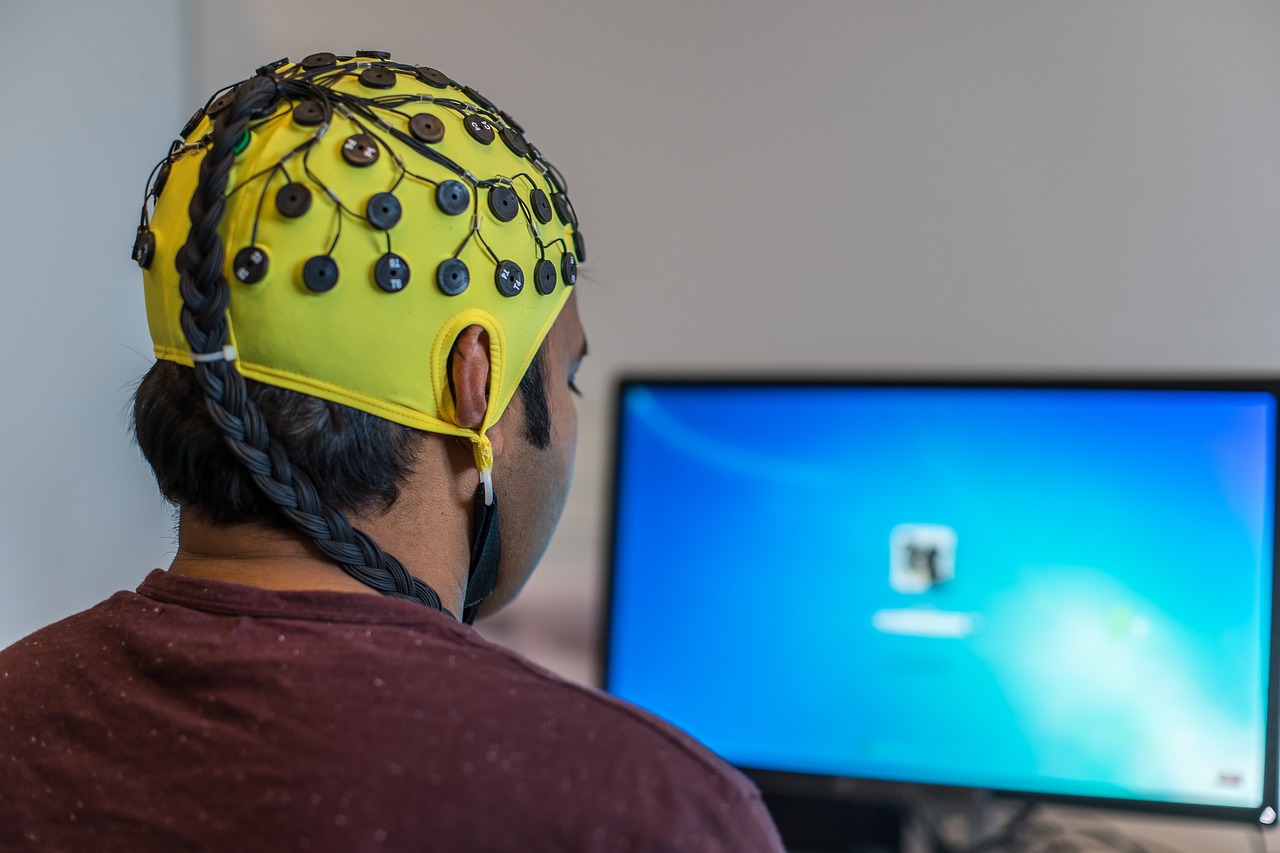
The human brain generates electrical patterns that reveal our mental states, emotions, and cognitive abilities. Modern technology now allows us to capture and analyze these brainwave signatures with unprecedented precision.

Brainwave pattern mapping represents one of the most promising frontiers in neuroscience and cognitive enhancement. By understanding the electrical rhythms our brains produce, we’re gaining powerful insights into how we think, learn, create, and heal. This technology is transforming fields from education and healthcare to performance optimization and mental wellness, offering pathways to unlock human potential we’re only beginning to understand.
🧠 Understanding the Electrical Symphony of Your Brain
Every thought, emotion, and action originates from billions of neurons communicating through electrical impulses. These collective electrical activities create rhythmic patterns—brainwaves—that oscillate at different frequencies measured in Hertz (Hz). Scientists categorize these patterns into distinct bands, each associated with specific mental states and functions.
Delta waves (0.5-4 Hz) dominate during deep sleep and restorative unconscious states. Theta waves (4-8 Hz) emerge during meditation, creativity, and light sleep. Alpha waves (8-13 Hz) characterize relaxed wakefulness and calm focus. Beta waves (13-30 Hz) accompany active thinking, problem-solving, and concentration. Gamma waves (30-100 Hz) represent peak cognitive functioning and information processing.
Understanding these patterns provides a window into the brain’s operational state at any given moment. This knowledge forms the foundation for targeted interventions that can optimize mental performance and wellbeing.
The Technology Behind Brainwave Mapping
Electroencephalography (EEG) remains the primary tool for capturing brainwave activity. Non-invasive electrodes placed on the scalp detect electrical signals generated by neuronal activity. Modern EEG devices have evolved from bulky laboratory equipment to portable, even wearable, consumer-friendly headsets.
Advanced signal processing algorithms now transform raw electrical data into meaningful visualizations and metrics. Machine learning models can identify subtle patterns associated with specific cognitive states, predict mental health conditions, and even decode intended actions before they’re physically executed.
Quantitative EEG (qEEG) takes this further by comparing individual brain patterns against normative databases. This approach reveals deviations that might indicate cognitive dysfunction, learning disabilities, or potential for enhanced performance in specific domains.
From Laboratory to Living Room
The democratization of brainwave technology has accelerated dramatically. What once required expensive medical equipment and specialized expertise is now accessible through consumer devices costing a few hundred dollars. These tools empower individuals to monitor their own neural patterns and engage in self-directed cognitive training.
Muse, Neurosity, and similar devices exemplify this trend, offering real-time feedback for meditation practice, focus training, and sleep improvement. While these consumer-grade tools lack the precision of clinical equipment, they provide sufficient accuracy for personal insight and biofeedback applications.
🎯 Cognitive Enhancement Through Neurofeedback
Neurofeedback represents one of the most established applications of brainwave mapping. This technique trains individuals to voluntarily modify their brain patterns through real-time feedback. When users successfully shift their brainwaves toward desired frequencies, they receive positive reinforcement through audio, visual, or haptic signals.
Research demonstrates neurofeedback’s effectiveness for ADHD management, with many studies showing improvements comparable to medication but without side effects. Patients learn to increase beta waves associated with attention while reducing theta waves linked to distraction.
Athletes and executives use neurofeedback to cultivate “flow states”—optimal performance zones characterized by specific brainwave patterns. By training their brains to reliably enter these states, they enhance decision-making speed, reduce performance anxiety, and maintain concentration under pressure.
Personalized Learning Based on Brain Signatures
Educational systems are beginning to leverage brainwave data to optimize learning experiences. By monitoring students’ neural patterns during lessons, adaptive systems can detect confusion, boredom, or cognitive overload in real-time.
When brainwave patterns indicate struggling comprehension, the system might slow presentation pace, offer additional examples, or shift to different teaching modalities. Conversely, when patterns suggest mastery, the curriculum can accelerate to maintain engagement and challenge.
This neuroadaptive approach promises to revolutionize education by moving beyond one-size-fits-all models toward truly personalized learning that responds to each student’s unique cognitive rhythms and optimal learning states.
Mental Health Diagnosis and Treatment Revolution 🔬
Traditional psychiatric diagnosis relies heavily on subjective symptom reports and behavioral observations. Brainwave pattern mapping introduces objective biological markers that can support diagnosis, predict treatment response, and monitor therapeutic progress.
Depression often presents with characteristic EEG patterns, including frontal asymmetry where left hemisphere activity is reduced relative to the right. Anxiety disorders show excessive high-frequency beta activity. These biomarkers can guide treatment selection and provide early warning of relapse.
Emerging research links specific brainwave patterns to suicide risk, potentially enabling preventive interventions. Similarly, patterns associated with treatment-resistant depression can be identified early, prompting alternative therapeutic approaches before years of ineffective treatment.
Non-Invasive Brain Stimulation Guided by Mapping
Transcranial magnetic stimulation (TMS) and transcranial direct current stimulation (tDCS) can modify brain activity without surgery or medication. When guided by detailed brainwave mapping, these interventions become more precise and effective.
Clinicians can identify exactly which brain regions show aberrant patterns, then target those specific areas with stimulation protocols designed to normalize activity. This personalized approach dramatically improves outcomes compared to standardized treatment protocols.
Sleep Optimization and Recovery Enhancement 😴
Quality sleep depends on progressing smoothly through distinct stages, each characterized by specific brainwave patterns. Deep slow-wave sleep (dominated by delta waves) provides physical restoration, while REM sleep (showing patterns similar to wakefulness) consolidates memories and processes emotions.
Brainwave monitoring during sleep reveals disruptions invisible to conventional sleep studies. Microarousals, fragmented sleep architecture, and insufficient time in restorative stages all compromise recovery even when total sleep duration seems adequate.
Smart sleep systems use this information to optimize bedroom conditions. Some devices deliver precisely timed audio tones that enhance slow-wave activity, effectively deepening sleep. Others can detect optimal wake windows within sleep cycles, reducing grogginess upon awakening.
Athletic Performance and Recovery Tracking
Elite athletes increasingly monitor brainwave patterns to optimize training and recovery. Specific EEG signatures indicate nervous system readiness, predicting whether the body can handle intense training or requires additional rest.
Post-concussion return-to-play decisions benefit enormously from brainwave assessment. Visual symptom resolution doesn’t guarantee complete brain healing. EEG patterns can detect lingering dysfunction, preventing premature return that risks severe complications.
🚀 Brain-Computer Interfaces and Direct Neural Control
Perhaps the most transformative application involves using decoded brainwave patterns to control external devices directly. Brain-computer interfaces (BCIs) translate neural intentions into commands without requiring muscle movement.
For paralyzed individuals, BCIs restore communication and autonomy. Users can type messages, control wheelchairs, and operate prosthetic limbs through thought alone. Recent advances enable control with impressive speed and accuracy, approaching natural movement capabilities.
Beyond medical applications, BCIs promise to revolutionize human-technology interaction. Imagine adjusting your home environment, navigating digital interfaces, or controlling drones using only mental commands. This isn’t science fiction—early versions already exist in consumer products.
Cognitive State Detection for Safety Systems
Vehicles equipped with brainwave monitoring could detect drowsiness or distraction before accidents occur. When patterns indicate dangerous attention lapses, the system could alert the driver, activate autonomous safety features, or safely bring the vehicle to a stop.
Similar applications extend to industrial settings where operators manage complex, safety-critical systems. Real-time cognitive load assessment ensures operators aren’t overwhelmed, while drowsiness detection prevents fatigue-related errors.
The Creativity and Innovation Connection 🎨
Creative insights often emerge when the brain enters specific states characterized by particular brainwave patterns. Research identifies increased alpha waves in the right temporal lobe during creative problem-solving, along with enhanced communication between normally segregated brain regions.
Understanding these patterns enables deliberate cultivation of creative states. Neurofeedback protocols can train individuals to access these neural configurations more reliably, potentially enhancing innovative thinking and artistic expression.
Some organizations now use brainwave monitoring during brainstorming sessions to identify when teams collectively enter collaborative flow states. This data informs optimal meeting structures, break timing, and environmental conditions that maximize creative output.
Challenges and Ethical Considerations ⚖️
As brainwave technology advances, important questions emerge about privacy, consent, and appropriate use. Brain data represents perhaps the most intimate information possible—our thoughts, emotions, and mental states rendered visible to others.
Who owns your brainwave data? Can employers require monitoring to verify employee attention? Should insurance companies access brain patterns that might predict future health conditions? These questions lack clear answers, requiring thoughtful policy development alongside technological advancement.
The potential for manipulation raises concerns too. If we can decode and influence brain states, safeguards must prevent coercive or deceptive applications. Cognitive liberty—the right to mental self-determination—may require explicit legal protection as these technologies mature.
Accuracy Limitations and Interpretation Challenges
Current brainwave mapping provides valuable insights but remains imperfect. Consumer devices offer lower signal quality than medical equipment. Environmental factors, muscle tension, and movement create artifacts that complicate interpretation.
Individual variation means patterns associated with specific states in one person might indicate something entirely different in another. Overconfident interpretation risks misdiagnosis, inappropriate interventions, or misguided decisions based on incomplete understanding.
The technology works best when viewed as one data source among many rather than a definitive window into mental states. Combining brainwave data with behavioral observations, self-reports, and other biomarkers provides more reliable insights than any single measure alone.
🌟 Building Your Personal Brain-Optimized Future
You needn’t wait for future developments to benefit from brainwave science. Practical applications exist today for anyone interested in optimizing their cognitive function and mental wellbeing.
Begin by establishing baseline awareness of your mental states throughout the day. Notice when you feel most focused, creative, or relaxed. Simple meditation apps that incorporate brainwave principles can help develop this awareness even without specialized equipment.
If you’re ready to invest in technology, consumer EEG headsets offer surprisingly capable entry points. These devices typically include apps that guide meditation practice, provide focus training, or track sleep quality based on brainwave patterns.
Integrating Brainwave Insights Into Daily Life
Understanding your unique brainwave patterns enables schedule optimization around cognitive rhythms. If your brain shows peak beta activity mid-morning, schedule demanding analytical work then rather than fighting afternoon theta-wave drowsiness with caffeine.
Pre-sleep routines become more effective when informed by brainwave principles. Activities that promote alpha waves—like gentle yoga or reading—facilitate the transition toward theta and delta sleep states more smoothly than stimulating beta-wave activities like arguing on social media.
Creative work benefits from deliberate state cultivation. When facing creative blocks, techniques that boost alpha waves—walking in nature, showering, or doodling—often unlock stuck thinking more effectively than forcing continued beta-wave problem-solving effort.
The Converging Future of Neural Technology 🔮
Brainwave mapping doesn’t exist in isolation. Its power multiplies when combined with other emerging technologies. Artificial intelligence enhances pattern recognition beyond human capability, identifying subtle signatures invisible to traditional analysis.
Virtual reality environments can respond in real-time to users’ brain states, automatically adjusting difficulty, pacing, or content based on cognitive load and emotional state. This creates truly adaptive experiences impossible with conventional interfaces.
Neurochemical sensing combined with electrical pattern mapping provides comprehensive pictures of brain function. Understanding both neurotransmitter levels and circuit activity enables more targeted interventions than either approach alone.
The next decade will likely bring implantable sensors offering continuous high-resolution brain monitoring. Rather than occasional snapshots, we’ll have complete neural activity records enabling unprecedented insight into how daily choices affect long-term brain health and function.
Preparing for a Brain-Literate Society
As brainwave technology becomes mainstream, basic neural literacy will prove increasingly valuable. Understanding fundamental principles—what different wave patterns mean, how various activities affect brain states, how to interpret simple EEG data—will empower informed engagement with these tools.
Educational systems should incorporate neuroscience basics, helping students understand their own cognitive functioning. This knowledge supports better learning strategies, mental health awareness, and realistic expectations about brain capabilities and limitations.
Healthcare providers need training in brain pattern interpretation to effectively incorporate this data into clinical practice. The gap between available technology and clinical expertise currently limits potential benefits.
Policymakers must engage proactively with these developments rather than reactively addressing problems after they emerge. Thoughtful frameworks balancing innovation, privacy, equity, and safety require input from diverse stakeholders including neuroscientists, ethicists, technologists, and affected communities.

Your Brain’s Unique Signature Awaits Discovery 💡
Each human brain generates patterns as distinctive as fingerprints. Your unique neural signature reflects your experiences, genetics, current state, and future potential. Brainwave pattern mapping offers unprecedented access to this personal neural landscape.
The journey from curiosity to application needn’t be daunting. Start with education—understanding basic neuroscience principles and how different mental states manifest in brain activity. Experiment with accessible technologies, approach claims critically, and integrate insights gradually into your daily routines.
Whether your goals involve peak performance, creative enhancement, mental health improvement, or simple curiosity about your inner workings, brainwave technology offers powerful tools for self-understanding and optimization.
The future promises even more remarkable developments—more accurate sensors, better interpretation algorithms, seamless integration with daily technology, and deeper understanding of how to positively influence our neural patterns. We stand at the beginning of a revolution in human cognitive potential.
By engaging thoughtfully with these technologies today, you position yourself to benefit as capabilities expand while contributing to conversations shaping how these powerful tools develop and deploy across society. Your brain’s remarkable potential awaits—the tools to unlock it are finally within reach.